

Dementia is on pace to double by 2060, and geriatrician Anna Chodos, M.D., M.P.H., explains how primary care physicians can spot cognitive decline early and why it matters even without a cure.
Dementia is on pace to double by 2060, and geriatrician Anna Chodos, M.D., M.P.H., explains how primary care physicians can spot cognitive decline early and why it matters even without a cure.
More than four in five physicians now work for hospitals, health systems or corporate entities, and Physicians Advocacy Institute CEO Kelly Kenney explains why the shift hasn't stopped and what it means for physicians who want to stay independent.
Employers guessed 39% of their health care workers would look for a new job this year, but Workforce Edge's Adele Webb explains why the actual number was 59% and what keeps younger workers from leaving.

Medicare's final 2027 fee schedule softened the same-day visit cut but deepened the conversion factor cut, and MGMA's Anders Gilberg explains what a lame-duck Congress and a new Democratic majority could do about it.
Medicare's final 2027 fee schedule gives accountable care organizations some long-sought wins, but deeper physician payment cuts leave much of the fix to Congress.

Revenue cycle consultant Taya Gordon gives her first read on Medicare's final 2027 physician fee schedule, from the 2.31% conversion factor cut to the scaled-back same-day visit reduction and the switch from G2211 to modifier B1.
Pear Suite CEO Colby Takeda explains where community health workers fit as Medicaid work requirements take effect and what physicians should ask their state and health plans before Jan. 1.

Two Mayo Clinic preventive cardiologists explain how primary care physicians can turn a patient's wish for a quick fix into heart-healthy habits that last.

Four health policy experts take on the proposed 2027 Medicare physician fee schedule, from the conversion factor and the same-day visit cut to whether any payment model gets it right.
Speakers at MGMA's centennial conference in San Antonio covered a proposed 2027 Medicare pay cut, Medicare Advantage downcoding and what physicians should know before using AI scribes.

Sandra Johnson of CliniComp explains why cost has overtaken technology as the biggest barrier to interoperability and what fragmented patient data means for physicians at the point of care.
Dina Taylor of HireVue explains how physicians can use AI to sort through a flood of AI-written job applications while a human still makes the hiring decision.

MGMA Acting CEO Akash Madiah says practices facing flat Medicare pay should find the money they've already earned and aren't collecting before they add volume.
Kate Atchley, Ph.D., of the Haslam College of Business at the University of Tennessee, Knoxville, explains why clinical expertise alone can't prepare physicians to lead, the five skills she sees as essential and how organizations can build leaders before they step into the role.
Family physician Kenneth Qiu, M.D., lead author of a national survey of direct primary care practices, explains how physicians build a patient panel, why the model isn't concierge medicine and the Medicare billing rule that slows new practices.
Patient Prism co-founder and CEO Amol Nirgudkar explains what unanswered phones cost physicians in patients and ad spending, and where AI voice agents can help today.
Minc Law partner Michael Pelagalli explains when a negative review becomes defamation, why HIPAA limits what physicians can say in reply and how anonymous reviewers get unmasked.
D2 Solutions President and CEO Dean Erhardt says most prior authorization rejections stem from administrative errors rather than clinical criteria, and that many patients caught in the delay don't know who to call.

Nearly 54 percent lower costs for adults with chronic disease. Four experts on why primary care still gets under 5% of health care spending.

Sage Growth Partners CEO Dan D'Orazio says fee-for-service revenue still outweighs the penalties meant to move hospitals and physicians away from it, and he expects value-based care to make incremental gains at best.
Buzz Health President Joseph Kleiman says the prescriptions patients abandon due to cost rarely appear in a physician's workflow, and he attributes this to disconnected systems.
Anders Gilberg of MGMA explains the same-day payment proposal sitting in Medicare's 2027 fee schedule, and why practices won't know its fate until the final rule lands around Nov. 1.
Rebecca Schoon, Ph.D., who helped lead the Oregon arm of a national moral injury report, says patients can see what corporate ownership and insurer barriers are doing to their doctors.
Caroline Pearson of the Peterson Health Technology Institute says the way health care pays for clinical AI will decide whether it lowers costs or drives them up.

Health care economist Wayne Winegarden, Ph.D., says two decades of inflation-eroded Medicare payment, not corporate ownership, is what keeps pushing independent practices to sell.
Anthony Orsini, D.O., says most physicians were never trained for the conversation that follows a medical error, and that how they handle it often decides whether the case ends in court.
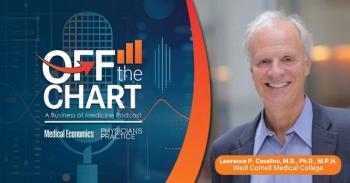
Lawrence Casalino, M.D., Ph.D., M.P.H., argues that as medicine consolidates, physicians are increasingly treated as interchangeable parts, and that the damage shows up in the parts of care no quality program measures.
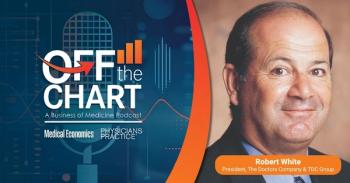
For years, falling claims frequency quietly held malpractice premiums down, and there are early signs that's about to stop.
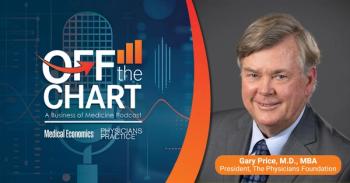
Fifteen years of research hasn't moved the federal rules that keep new physician-owned hospitals from opening.
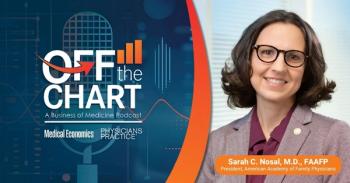
Three counseling codes took effect Jan. 1 for vaccine visits that end without a shot. CMS will not pay for them and neither will most private payers.