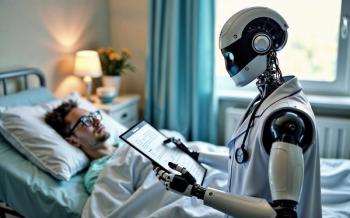
What do physicians need to counter burnout and misinformation? Time with patients
AI advances promise to automate the mundane administrative tasks for doctors, but will the free time just mean more patients added to the schedule?
Artificial intelligence is arriving in physician practices with a familiar promise: less time on paperwork and more time for patients and for life outside the office. Ambient scribes draft visit notes, automated tools handle prior authorizations and inbox triage, and predictive systems flag gaps in care before they become problems. For a profession worn down by documentation and after-hours charting, the appeal is obvious.
But the hours AI frees up have to go somewhere, and physicians aren't always the ones who decide where. If health systems and practice owners measure AI's value in productivity, the time saved on notes may be filled with extra appointments, shorter visits and larger panels. Burnout wouldn't disappear. It would simply change shape.
The real question isn't whether AI can reduce administrative burden. It's who captures the benefit, and whether physicians get a say in how the reclaimed time is used.
Medical Economics spoke with Rohan Ramakrishna, co-founder of Roon, to learn more.