What do physicians need to counter burnout and misinformation? Time with patients
What do physicians need to counter burnout and misinformation? Time with patients
Nearly half of physicians (49%) say well-being concerns led them to consider or take steps such as
Burnout is now understood as a systemic problem, not one solved by making physicians individually tougher, said Foundation President Gary Price, M.D., MBA.
A board-certified plastic surgeon and past president of the Connecticut State Medical Society, he spoke with Medical Economics about how
This transcript has been edited for length and clarity.
Gary Price, M.D., MBA: We have reached the point where it's generally understood that we have a problem. We're certainly being confronted with it by the looming shortage of physicians. Physicians are retiring earlier than they used to, and many are considering cutting their hours. This is a sea change from 25 years ago, when physicians practiced longer, and their communities could count on continuity of their local physicians.
The initial reaction from our institutional leaders was, “This is a problem with resilience. We just need to make these health care workers tougher.” I can assure you, you could not have selected a tougher group of people. That was a misdirected attempt to solve a very serious problem. We are now at the point where everyone realizes this is a systemic issue, tied to how work, structures and the social milieu have changed.
We have to encourage changes in the way we structure the work environment of everyone in health care, with input from other disciplines, like engineering or aviation. This is a real issue in the quality of outcomes and the safety of care we deliver. I think this is the inflection point, for leaders within these institutions, our government and academics to reframe the way we think about this, so we can make the systemic changes we need to make.
Related coverage:
Gary Price, M.D., MBA: The point that it has its own stresses, and that they differ in magnitude between the employed and independent models, is well taken. As you know, 80% of our physicians now are employees of some sort, a sea change from just five years ago. Independent practitioners feel they have more control over the patients they see and the time they spend with them, but their stress levels are only about 10% less, for instance 60% among employed physicians and 50% among independents. That's still a huge portion who see this as a big problem.
The role of independent physicians, in my community, is that they're a safety valve, easier to see on an ongoing basis than their employed corporate counterparts. Consolidation has left patients with no choice in many types of medicine but to be seen in the bigger consolidated system, where it's tough to get an appointment. Some models are thriving, offering a hybrid between independent and corporate practice.
Independent practice still provides a good contrast to the model that emerges from corporate practice, and I'm hopeful it will continue to thrive. I don't think we'll ever be able to go back to the way things were, because the drive for consolidation is just part of the fabric of our economy, and it's happened in every other segment of our society.
Gary Price, M.D., MBA: We need both. We have a looming shortage of physicians, estimated at about 36,000 over the next 10 years, including an obvious shortage of primary care physicians. In almost every area of the country, it's already difficult for patients to find one. I know for myself, it was a real challenge to find a primary care practice, even in an urban environment.
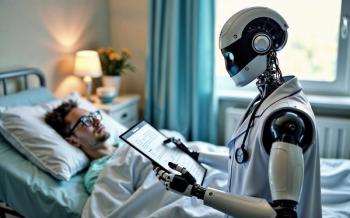
Physicians also need to work in an environment that encourages the best care, and AI can help give us more time with patients. Recent studies on AI scribes found they decreased physicians' electronic medical record paperwork time by about 20%. Unfortunately, the backlog of other administrative burdens, what I'll call stupid stuff, was so great that physicians spent most of the time they saved catching up on those tasks, to the disappointment of their financial and institutional leaders.
Still, the AI scribe did provide an opportunity. It took a burden off physicians, and some indexes of their well-being improved. I don't think AI should be viewed as a panacea. Using it to substitute for human-to-human interaction may be a bad thing, because if you don't do that well, patients don't trust the advice they're given, and they get worse outcomes.