Coverage confusion could disrupt patient care in 2027
A former congressman and two health policy advocates expect shutdown standoffs to set the terms of any health care deal next year.
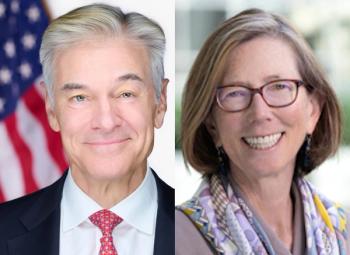
Robert E. Andrews expects Democrats to come out of the Nov. 3 midterm elections with a House majority of at least 225 seats.
“I think the range is from a minimum of 225 seats, probably to 240 at the upper end,” Andrews, CEO of the Health Transformation Alliance and a 24-year member of the House from New Jersey, said during a
In the Senate, Andrews sees two likely outcomes: Democrats win the close races and hold 52 or 53 seats, or they lose most of them and stay at 48 or 49. Under either scenario, he expects divided government to produce about “one bite a year out of the apple” on health care legislation, with each bite coming during a government shutdown or debt ceiling standoff.
“This time the Democrats will have more negotiating leverage,” said Andrews, one of the authors of the Patient Protection and Affordable Care Act (ACA). “Being the minority party, they advocated for renewal of the
Andrews was joined by Lisa Kidder Hrobsky, senior vice president of federal relations, advocacy and political affairs at the American Hospital Association, and Danielle Turnipseed, chief public policy officer at the Association of American Medical Colleges (AAMC). Ron Southwick, lead editor of Chief Healthcare Executive, moderated.
Chief Healthcare Executive is releasing the hourlong roundtable in segments ahead of Election Day. The first covers the panel's outlook for Medicaid, ACA subsidies and NIH funding.
“He is unpredictable,” Andrews said of President Donald Trump. “Now his supporters would say he's flexible and can get stuff done. His critics would say that he's erratic and can't decide what he wants to do. But I wouldn't rule anything out here.”
If Trump got something of great importance to him in return, such as an extension of tariffs or a permanent capital gains tax cut, Andrews said the president could conceivably agree to roll back all of the Medicaid cuts in H.R. 1, the 2025 budget reconciliation law.
“It is more likely, though, that there will be incremental changes,” he said.
If Democratic leaders make the ACA subsidies their top priority, Andrews said perhaps half of the Biden-era subsidy levels could be restored. If they focus on Medicaid, the
Kidder Hrobsky said Democrats have been fairly forthcoming about an agenda built on affordability, and not only in health care, along with oversight of how the administration has operated over the past two years.
“It's not going to be probably the most productive Congress, but I do think the Democrats have a large list of things they'd like to bring to the table,” she said.
“Medicare, we hear about often. Medicaid, we hear access to care,” Turnipseed said. “Let's see how those preferences of the people play out state by state, and what that means for the entire country.”
“A huge percentage of the action will be in the executive branch through regulation, executive order and so on and so forth,” Andrews said. He expects that activity to intensify, with much of it ending up in court.
Andrews pointed to price transparency and pharmacy benefit manager (PBM) reform as areas where he has heard the same signals from Republicans and Democrats. He cited a recent move by the Centers for Medicare & Medicaid Services toward requiring PBMs to disclose all of their revenue sources, which he said Democrats largely support.
“Transparency is definitely one of those from a hospital perspective that we're watching closely to see if there is sort of the momentum to carry it through,” Kidder Hrobsky said. “I think we all think transparency is a good thing.”
“There's strong bipartisan support for NIH funding,” Turnipseed said of the National Institutes of Health (NIH). “We do expect Congress to continue to push back against any proposed cuts, and I'd like to see that funding stabilized and possibly increased to see some growth there.”
An
Holding grant money and then releasing it aggressively near the end of the fiscal year created disruption and uncertainty for research institutions, Turnipseed said.
“We can't continue to see that kind of progress if the money does not make it out the door,” she said.
“The Democratic Congress would want to go back to a more clinically peer-driven grant awards process. The administration wants to have more of its hand in play,” Andrews said of how NIH grants are awarded.
He added that if Republicans keep the Senate and Sen. Susan Collins (R-Maine) wins reelection, she would be in a stronger position to push for NIH funding.
“I would bet on more money in NIH,” Andrews said.