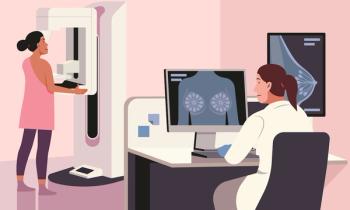
A Hologic survey of 1,000 U.S. women aged 35 to 75 found that a direct recommendation from a physician was the top motivator for overdue patients, while knowledge gaps about cost, radiation and breast density persist.
Most teens and young adults call the adult health care system confusing, and the physicians who treat them agree.
Most teens and young adults find the adult health care system confusing, and physicians who treat them agree they're unprepared to navigate it on their own, according to a new Harris Poll survey commissioned by
The Healthcare Shift Survey polled 1,514 teens and young adults aged 14 to 26, 1,502 parents and 400 physicians, split evenly between pediatricians and primary care physicians (PCPs) who handle adult primary care. Seventy-one percent of the youth respondents said they find the adult system confusing, and 66% said they would have benefited from more preparation before moving to an adult PCP.
The physicians largely agreed. Eighty-nine percent of PCPs and 93% of pediatricians surveyed said the U.S. does not adequately prepare teens and young adults to navigate the adult health care system. Higher shares, 93% of PCPs and 97% of pediatricians, said those
Among young adults who had made the switch, 43% reported a stretch with no PCP after leaving pediatric care, 28% had a health issue that went untreated, and 26% said they relied more on the emergency room. Thirty percent said their health was worse after making the switch.
"Moving from pediatric to adult health care requires knowledge and skills that should be built along the way, helping youth maximize their skills at each developmental level," said Susan Shanske, M.S.W., LICSW, a clinical social worker and director of transitional care support for the BRIDGES Adult Transition Program. She added that teens are often "navigating the practical challenges of the health care system alongside the emotional impact of leaving school, changing relationships and a desire for increased independence."
Physicians flagged a similar set of skill gaps in their younger patients. Overreliance on parents was the most cited deficit on both sides, named by 67% of PCPs and 78% of pediatricians. Other gaps included accurately sharing a personal medical history (57% and 68%), knowing how to ask physicians questions (57% and 55%) and understanding the basics of health insurance (55% and 66%).
The stakes are higher for the roughly three in 10 youth respondents who reported a
Adult primary care has its own problems. A February 2026 thematic report from the Robert Graham Center, the Milbank Memorial Fund and the Physicians Foundation, titled "
Yalda Jabbarpour, M.D., a family physician and vice president and director of the Robert Graham Center and a co-author of the report, told Medical Economics that workforce shortages are at the center of the problem. "We know that there is a primary care crisis, and it's coming from a workforce shortage, and really the only way that we're going to solve that is to better resource primary care offices," she said.
Long waits are pushing patients toward urgent care, telehealth and other walk-in options, which can break up the kind of continuous physician relationship the Ipsen survey identifies as missing for many young adults.
"People are looking for ways to get their care, whether that's through direct primary care, whether that's through urgent care, whether that's through like these new telehealth companies that are popping up everywhere, where you can get your care, it's because it's hard for patients to get in," Jabbarpour said.
Andrea Giamalva, M.D., FAAFP, a family medicine physician and chief medical officer of Experity, said in a separate
Societal expectations have shifted toward on-demand, instant service across nearly every consumer category — part of what Giamalva described as an "Amazon era" — so it isn't surprising that younger patients expect health care to work the same way.
Despite the gaps, there is a broad consensus across the survey: more help is needed.
Eighty-one percent of youth respondents and 84% of parents said they want more resources to support the move to adult primary care. Eighty-eight percent of pediatricians and 79% of PCPs said current resources are inadequate. Eighty-four percent of youth and 92% of parents said adult physicians should approach care for teens and young adults differently, recognizing they may need a different level of support.
"Building the life skills you need as a young adult is hard work, which is why parents and educators focus on teaching teens practical skills like how to drive or use a bank account before they turn 18," Michelle Werner, executive vice president and president of North America at Ipsen, said in the company's announcement. "This survey makes it clear that learning to navigate the health care system needs the same kind of focus."
Ipsen has built a set of free transition tools at