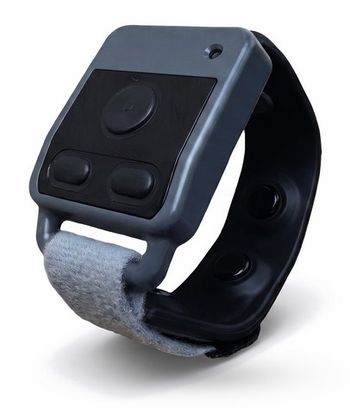
Encora X1, an FDA-cleared wrist device, uses mechanical rather than electrical neurostimulation, giving VA clinicians an option for patients who can't tolerate medication or have implanted electrical devices.
AcuityMD's 2026 benchmark report of 150 MedTech reps finds AI users report stronger quota attainment and time savings, even though most still rely on general-purpose tools for basic tasks.
Medical device sales representatives who use artificial intelligence in their day-to-day work are three times more likely to meet or exceed quota than those who don't, according to a new industry survey from AcuityMD, an AI platform for medical technology companies.
The findings come from AcuityMD's report, "AI Adoption in MedTech Sales: 2026 Industry Benchmarks and Trends," which surveyed 150 sales reps working across capital equipment, durable medical equipment and surgical product sales. The report also found reps who missed quota were nearly twice as likely to say they had never used AI professionally.
Despite the apparent performance gap, AI use remains far from universal in the field. Only 36% of respondents reported regular or occasional use of AI in their day-to-day work, according to the survey. Among that group, the productivity gains were substantial: 92% said AI saved them at least four hours a week.
However, the survey found that most reps who have adopted AI are applying it to relatively basic,
"The real opportunity in AI is not just efficiency, it is also about making better decisions — for example, which accounts to prioritize, which opportunities to pursue, how to prepare for a conversation that will move a relationship forward," Lee Smith, AcuityMD co-founder and vice president of customer experience, said in a statement. "The teams that figure this out won't just hit quota, they'll make it harder for everyone else to catch up."
The report also highlighted a divide in the type of AI tools reps are using. Roughly two-thirds of respondents, 69%, said they rely exclusively on general-purpose AI tools such as ChatGPT. According to AcuityMD, those tools can automate routine work but lack the industry-specific context needed to support higher-value activities such as provider discovery, account prioritization and market intelligence.
By contrast, reps who met or exceeded quota were more than twice as likely to have access to company-provided AI solutions than reps who missed quota, the survey found — a pattern AcuityMD said suggests purpose-built tools may help unlock more strategic use cases than consumer-grade alternatives.
"The survey findings reinforce something we've believed for a long time: AI is only as valuable as the data and context behind it," Smith said. "Without that foundation, AI can help automate tasks, but it cannot reliably guide commercial decisions."
The report arrives as
That pattern mirrors what AcuityMD found on the sales side: broad, shallow adoption of general-purpose tools for tactical work, with a smaller subset of teams beginning to explore how AI might guide judgment calls rather than just save time. Industry analysts have pointed to data quality and context — whether a tool understands a specific product line, provider network or regional market — as the key differentiator between AI that merely automates and AI that meaningfully changes outcomes.
For medical device manufacturers, the implications extend beyond the sales floor. As reimbursement pathways, regulatory clearances and go-to-market strategies grow more complex, commercial teams are increasingly expected to operate with the same data-driven rigor as clinical and regulatory functions. AcuityMD's findings suggest that gap between tool access and tool sophistication may be as important to sales performance as adoption itself.