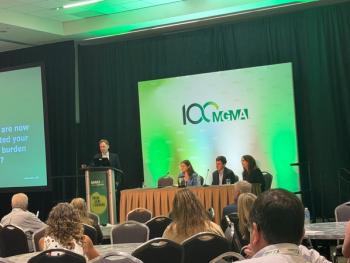
From a same-day payment cut to AI-run prior authorization in traditional Medicare, MGMA's government affairs team laid out what Washington has in store for physicians next year.
Retrospective data are not irrelevant, but primary care needs AI and advanced analytics to treat real-world patients in real time.
After 14 years of participating in the Medicare Shared Savings Program (MSSP) and other models from the Centers for Medicare and Medicaid Innovation, one lesson has become clear: The levers that meaningfully reduce total cost of care are neither static nor simplistic. As accountable care organizations (ACOs) have matured, so too has the sophistication of their data analytics, shifting the focus from broad utilization cuts to targeted, patient-specific interventions driven by predictive modeling, risk stratification and real-time clinical insights. What once centered on reducing admissions now extends to optimizing site-of-care decisions, managing specialty spend and proactively identifying rising-risk patients before costs accelerate. In this evolving landscape, success depends less on participation in a model and more on an organization’s ability to continuously refine the operational and clinical levers that actually move the cost curve.
Despite that progress, many ACOs still rely on basic, retrospective reports derived almost exclusively from claims data. That approach is inherently limited. Claims data are one-dimensional, lagging and often fail to reflect the clinical reality of the patient in front of the physician.
As health care continues its shift toward value-based care, ACOs that remain anchored in claims-based analytics that focus on retrospective cost-control levers — and fail to integrate richer data sources such as electronic health record data, pharmacy utilization, laboratory result trends and social determinants — risk becoming the Blockbuster Video of the value-based era. The next generation of high-performing ACOs will be defined by their ability to use advanced analytics and artificial intelligence (AI) to deliver meaningful, real-time insights that influence care at the point of service.
For many ACOs, their operational spotlight still remains fixed on issues such as 30-day readmissions, skilled nursing facility (SNF) spending and emergency department (ED) utilization. These measures are not meaningless. Readmissions can reflect poor transitions. SNF use can signal gaps in postacute management. ED use can highlight access problems or fragmented care.
For the primary care physician whose attributed patients determine whether the ACO earns it savings, these metrics are often blunt end points with limited opportunity for intervention. Too often, they become boxes to check rather than areas where the PCP can reliably influence the total cost curve.
That is the central tension in many MSSP discussions. Retrospective reports on readmissions, SNF cost or ED visits do provide visibility into patterns that would otherwise go unseen. That visibility has value. But their contribution to actual cost control is far more modest than the emphasis placed on them.
This is especially true when ACOs set fixed percentage targets for readmission rates, ED visits or flat benchmarks for SNF days and costs that bear little relationship to a PCP’s real ability to intervene. These targets assume a level of control that retrospective data do not support.
By the time these events occur, the clinical pathway has often already been shaped by illness burden, hospitalist decisions, specialist cascades, local market dynamics, family preferences and patient choice. The attributed PCP may learn from the data and adjust future care, but rarely has the authority to change what has already happened.
CMS is right to track 30-day readmissions; some are preventable and reflect gaps in discharge planning, communication or transitional care. However, many are not. A substantial share stems from disease progression, new complications, social barriers or decisions made in the hospital or ED before the PCP has a realistic chance to intervene.
In a hospitalist-driven system, PCPs often inherit accountability without commensurate authority. Although seven- to 14-day follow-up after hospitalization or ED visits is important for many patients, even timely visits may not provide sufficient opportunity to prevent readmission.
Retrospective readmission metrics may inform future strategy, but they do little to alter outcomes for patients already readmitted. As a primary lever for cost control, their impact is inherently limited.
ED utilization follows a similar pattern. Some ED visits are avoidable, and frequent low-acuity use can signal gaps in access, coordination or patient education.
But unlike a hospital’s control over its discharge process, an ACO has little control over a patient’s decision to seek emergency care. That decision is shaped by fear, convenience, prior experience and situational factors that often sit outside the reach of the primary care practice.
A patient traveling out of town, a family member who panics, after-hours and weekend care or a specialist advising “go to the ED if it worsens” can all drive ED use. Even in well-managed practices with strong access and communication, variability remains high.
A single redirected call can save thousands of dollars, but the next episode may bypass the practice entirely. ED utilization is worth tracking and improving, but it is too variable and externally driven to serve as a reliable primary cost lever for point-of-service decisions made by clinicians each and every day who see these patients.
The same limitations apply to SNF spending. Decisions about whether a patient goes to a facility, which facility is selected and how long the stay lasts are often driven by hospital discharge teams, bed availability, family logistics and local market conditions.
A narrow focus on reducing SNF days can also be counterproductive. For a frail patient with multiple comorbidities, a slightly longer, well-managed SNF stay may provide better therapy, closer monitoring and a safer transition home.
In many cases, the higher SNF spend prevents a far more expensive readmission. Evaluating SNF cost in isolation, without accounting for downstream impact, risks penalizing sound clinical judgment.
ACOs should not confuse what is easy to measure with what is meaningful to manage. A metric is not valuable simply because it can be counted.
The more relevant question is whether the PCP had a realistic opportunity to influence the outcome at the moment the spending decision was made. If the answer is no, the metric may be useful for surveillance but weak as a measure of performance and weak as evidence of ACO value.
ACOs that demonstrate real value to independent primary care shift focus to the point of service, where decisions are made in real time.
This is where relatively small interventions can prevent significant downstream spending. Referral management, imaging selection, medication choice, site-of-service decisions and specialist steering are often far more actionable than retrospective utilization reports.
Consider coronary artery calcium scoring. In the right patient, it refines cardiovascular risk and guides treatment decisions. If used appropriately, it can reduce unnecessary specialty referrals, avoid low-value testing cascades and support targeted preventive therapy. One well-chosen test can replace a chain of far more expensive and less informative interventions.
Not all impactful interventions are clinical; many effective strategies address social and logistical barriers to care.
Early engagement of social work after hospital discharge can stabilize patients facing food insecurity, housing challenges or limited support systems. Identifying transportation barriers and offering practical solutions can ensure follow-up care actually occurs.
Home visits provide direct insight into a patient’s environment and can uncover risks that are invisible in the clinic. These interventions are not complex, but they are highly effective because they address the factors that often determine whether a care plan succeeds or fails.
This is where advanced analytics and AI should be applied — not to produce more retrospective reports but to guide decisions in real time.
AI can identify high-value specialists, flag referral patterns that trigger unnecessary downstream spending and highlight which providers reliably return patients to primary care. It can surface formulary alternatives, suggest lower-cost sites of service and support evidence-based testing pathways.
The goal is not more data. It is better timing and better context — delivering the right insight at the moment a decision is being made.
A more effective ACO strategy would place less emphasis on retrospective utilization metrics and more on embedded decision support.
Provide PCPs with timely, actionable information on referrals, imaging, medications and postacute options. Build tools that influence the next order, the next referral and the next site-of-service decision.
That is where physicians still have leverage. That is where costs can be meaningfully influenced. And that is where ACOs can legitimately claim to add value.
Until MSSP better aligns incentives across the full continuum of care, ACOs will continue to be held accountable for outcomes they cannot fully control.
The attributed PCP can influence care, but major cost drivers often sit with hospitals, specialists, postacute providers, patient behavior and social determinants that shape whether care plans are executed.
That reality makes point-of-care support even more important. Patient education, medication simplification, social services, transportation assistance and timely care navigation can all change outcomes before expensive events occur.
Those interventions may not be as visible on a dashboard as readmission rates, ED visits or SNF days, but they are often far more powerful in bending the total cost curve.
Robert Resnik, M.D., MBA, is a board-certified internal medicine physician practicing in Cary, North Carolina. He earned his medical degree from Eastern Virginia Medical School and completed his residency at East Carolina University. He also holds an MBA from Duke University.