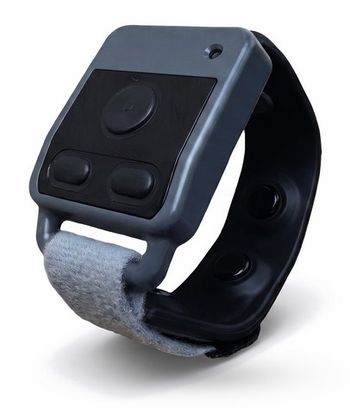
Encora X1, an FDA-cleared wrist device, uses mechanical rather than electrical neurostimulation, giving VA clinicians an option for patients who can't tolerate medication or have implanted electrical devices.
Mobile, AI-enabled imaging platform designed to improve workflow and precision in interventional suites
GE HealthCare has received U.S. Food and Drug Administration 510(k) clearance and CE Marking for Allia Moveo, a new mobile interventional imaging platform designed to improve workflow, imaging precision and flexibility in crowded procedure rooms, the company announced.
Allia Moveo is the latest version of
The system was designed to help clinicians adapt to the spatial constraints common in traditional interventional suites, according to the company. It features an intuitive user interface, quiet operation and maneuverability aimed at reducing complexity during minimally invasive procedures involving multiple clinicians.
The Hôpital Marie-Lannelongue near Paris was the first medical center worldwide to complete installation of Allia Moveo. The hospital, a national reference center for complex aortic disease, plans to use the platform to support vascular and cardiology procedures, including cone-beam computed tomography imaging. The system’s wide-bore design and flexible table movement are intended to accommodate patients of varying body size and weight while improving access and comfort for care teams.
“With Allia Moveo, we had this opportunity to position the system very quickly in any working position that will adapt the best to us,” said Stephan Haulon, head of the Aortic Center and Vascular Surgery at Hôpital Marie-Lannelongue. “One of the major milestones of this new system is having access to the reconstruction of the cone beam CT with CleaRecon DL, which is AI driven and gives you much better image quality.”
“With Allia Moveo, we’re elevating the clinician experience, removing complexity, accelerating workflow, and enabling greater control during procedures,” said Arnaud Marie, general manager of interventional solutions at GE HealthCare. “We are excited to collaborate with leading experts at Hôpital Marie-Lannelongue on the first installation of this system, which is a defining step forward for care in the interventional suite, and a testament to our shared commitment to advancing meaningful innovation with the goal of supporting better outcomes for care teams and the patients they treat.”
Following the first global installation in France, Baylor St. Luke’s Medical Center in Houston became the first U.S. hospital to install Allia Moveo.
“We are honored to be the first hospital in the United States to install Allia Moveo, and proud to help advance the next generation of interventional care,” said Brad Lembke, president of Baylor St. Luke’s Medical Center. “This innovative platform enhances how our clinicians navigate complex minimally invasive procedures by improving mobility, image clarity, and workflow efficiency. It strengthens our ability to deliver precise, patient-centered care while supporting our teams with technology designed for the evolving demands of modern interventional medicine.”
Interventional imaging systems have undergone rapid evolution in recent years as hospitals shift more procedures away from open surgery and toward minimally invasive approaches that rely heavily on real-time imaging, advanced software and precision navigation.
A major focus of innovation has been improving image quality while reducing artifacts that can obscure anatomy during complex procedures. AI-driven reconstruction tools, such as those integrated into newer cone-beam CT systems, are increasingly used to compensate for motion caused by breathing, blood flow or patient movement. These tools can improve visualization of vessels and surrounding structures without requiring repeat scans, helping clinicians make decisions more quickly and confidently.
Manufacturers are also prioritizing workflow efficiency and ergonomics. Modern interventional suites often host multiple clinicians, imaging systems and devices, creating space constraints that can slow procedures and increase fatigue. Compact, highly maneuverable C-arms and cable-free designs aim to make it easier to reposition imaging equipment without disrupting sterile fields or clinical flow.
Another area of advancement is augmented guidance, which overlays digital information onto live imaging to support complex interventions. These tools can assist with device placement, vessel navigation and procedural planning, particularly in cardiovascular and endovascular cases where precision is critical.
Noise reduction has also emerged as a design consideration, as quieter systems can improve communication among care teams and reduce stress during lengthy procedures. At the same time, interoperability with hospital IT systems and third-party devices is becoming increasingly important as clinicians seek more integrated, data-driven environments.
Together, these advances reflect a broader trend in interventional medicine: combining high-performance imaging, artificial intelligence and human-centered design to support clinicians while improving procedural confidence, efficiency and patient care.