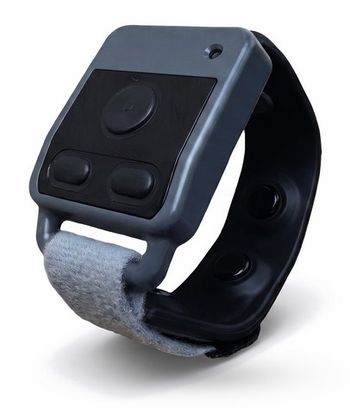
Encora X1, an FDA-cleared wrist device, uses mechanical rather than electrical neurostimulation, giving VA clinicians an option for patients who can't tolerate medication or have implanted electrical devices.
Device is intended to provide rapid nerve identification and functional evaluation for both large and small nerves during surgery
Epineuron Technologies said Wednesday it has received
The company said the intraoperative electrical stimulation device is intended to provide rapid nerve identification and functional evaluation for both large and small nerves during surgery. The clearance expands the company’s portfolio of bioelectronic technologies for peripheral nerve care.
Jana Dengler, a peripheral nerve surgeon at Sunnybrook Health Sciences Centre in Toronto and an early user of the device, said the technology showed versatility in complex procedures, including scarred revision surgeries and nerve transfers.
“I am impressed with the versatility of the product allowing me to evaluate nerves in scarred revision surgeries, nerve transfers, under extended tourniquet time, and in conjunction with PeriPulse,” Dengler said in a statement.
Epineuron CEO Sergio Aguirre said surgeons have increasingly sought integrated tools that support nerve care throughout procedures rather than standalone stimulation hardware.
“We’ve broadened our technology by complementing PeriPulse with Evala to support surgeons during the most demanding aspects of a procedure,” Aguirre said. “Whether it’s protecting nerves in real-time or boosting their regenerative capacity afterward, our technology integrates seamlessly into the surgical workflow to enhance efficiency and offer patients the best path to recovery.”
The company said the FDA clearance marks an expansion of its commercial bioelectronic platform focused on nerve evaluation and regeneration.
Founded as a medical device company specializing in bioelectronic medicine, Epineuron develops technologies aimed at restoring nerve function and improving peripheral nerve care.
Peripheral nerve care and bioelectronic medicine have become increasingly active areas of innovation as researchers and clinicians look for alternatives to more invasive surgical approaches and long-term pharmaceutical treatment strategies.
Recent advances have focused on improving how surgeons identify, monitor and preserve nerves during procedures. Newer intraoperative monitoring systems now provide more precise feedback about nerve function in real time, helping reduce accidental nerve injury during orthopedic, spine, head-and-neck and reconstructive surgeries. Miniaturized stimulation devices and improved imaging technologies have also made it easier to evaluate smaller nerves and more complex nerve pathways.
Another major trend involves the use of electrical stimulation to promote nerve regeneration after injury. Researchers have reported growing evidence that targeted stimulation may help accelerate nerve healing, improve muscle reinnervation and support functional recovery in some patients. These approaches are being studied for traumatic injuries, chronic pain conditions and post-surgical nerve damage.
Advances in biomaterials and regenerative medicine are also reshaping the field. New conduits, graft materials and tissue-engineering techniques are being developed to bridge nerve gaps and support cellular regeneration. Some experimental systems combine bioelectronic stimulation with regenerative scaffolds designed to encourage nerve growth over time.
Artificial intelligence and digital surgical planning tools are also beginning to play a larger role. AI-assisted systems are being explored to help surgeons interpret nerve signals, map anatomy more accurately and personalize treatment approaches based on patient-specific data.
Analysts say interest in the sector has grown as healthcare providers seek technologies that can improve surgical precision, reduce complications and potentially shorten recovery times for patients with nerve injuries or disorders.