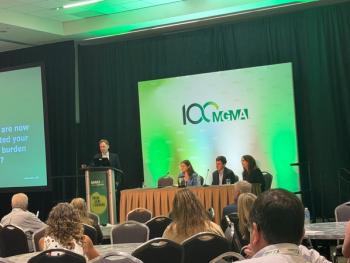
MGMA members described capping Medicare Advantage contracts and favoring commercial patients, while one Texas practice leader reluctantly called Medicare her best payer.
Primary care is a team sport, but some of the most important players are outside the physician’s office.
Community-clinical partnerships need a foundation of credibility if they are to guide patients to better health.
Meanwhile, accountable care organizations may be the best logical starting point to build such a partnership, but they are not the only one.
Two of the report's co-authors spoke with Medical Economics about the findings: Alex H. Krist, M.D., M.P.H., a professor of family medicine at Virginia Commonwealth University, and Andrea A. Anderson, M.D., M.Ed., FAAFP, a family physician and associate professor at George Washington University School of Medicine and Health Sciences. Along with their academic roles, both remain in practice as family physicians.
This transcript has been edited for length and clarity.
Andrea A. Anderson, M.D., FAAFP: That is why the communication we talked about is so important. Understanding what the community partner is offering, understanding what the goal of the clinical organization is, and being truly aligned in what we are offering patients — that is what makes a partnership credible. If we are referring a patient for help managing their diabetes, for example, it matters that we know what the community partner is teaching, how they are supporting that patient. The epidemic of misinformation is absolutely affecting people’s ability to care for their health. But with sustained partnerships, we can provide that repeated contact, that repeated trusted voice, that is important for the patient’s long-term goals.
It also goes back to funding. Patients develop trust in a program and start to say, yes, this is a great way for me to manage my diabetes, my obesity, my hypertension. But when funding runs out and the program disappears, that trust is lost. And rebuilding it is much harder the second time. Keeping these partnerships going is beneficial on both ends, for the clinician and for the patient.
Alex H. Krist, M.D., M.P.H.: I really love that question because I think it gets at a lot of different issues. Creating a community-clinical partnership has to begin from a place of authentic engagement — a real, fair, and equitable relationship between the two organizations. Historically, too often in health care, the response to the root causes of poor health has been to refer patients away rather than to truly partner with anyone. And often the way payment models work through insurers and Medicare, health care systems capture most of the money while community organizations are left inadequately supported. Our report is direct about this: There has to be fairness in how resources are allocated.
But here is the important flip side — doing this well actually builds trust. Authentic community partnerships demonstrate that clinical care systems are genuinely interested in improving health, not just generating billing. And because patients generally still trust their physicians, a physician’s warm referral to a community organization also transfers some of that trust to the partner. It tells the patient: This program is real, it is vetted, it is going to help you. It's not trying to sell me something, it's about making me healthier. There are many ways trust has to be present at the foundation of how these partnerships are formed. And when done well, it builds trust not just between the two organizations — but among the patients both are trying to serve.
Andrea A. Anderson, M.D., FAAFP: That warm handoff is so powerful. I tell my patient, go see this program, ask for Mary, she is wonderful. And Mary says, Dr. Anderson sent you — great, let’s get started. That familiarity builds confidence on all sides. That is something we know as physicians from our beneficial partnerships throughout our careers. The impact of these recommendations is the chance to codify that, and to build it at scale.
Alex H. Krist, M.D., M.P.H.: I think many different types of organizations should be able to participate. Accountable care organizations (ACOs — provider-led organizations accountable for the quality and cost of care for a defined patient population) are a nice framework, and that is where we started, because in theory an effective ACO has organizational capacity and an incentive structure that aligns with building these partnerships. ACOs are supposed to improve outcomes and reduce costs — which is exactly what effective community partnerships can do. And CMS is going to be very interested in supporting ACOs to do this work.
But I can also imagine other types of health systems, other types of clinical practice groups, and even community-based approaches built around a geographic region rather than a single entity. There are a number of different pathways. ACOs are a strong starting point.
Andrea A. Anderson, M.D., FAAFP: These partnerships can look many different ways, and one thing we wanted to make clear is that they can benefit many people, not just a particular segment of the population. Virtually everyone is managing at least one health issue, and we all can benefit from learning how to care for chronic illnesses we may already have, or how to prevent the ones we do not yet have. That's something that we're interested in, as physicians and other health care professionals, how can we help our patients with prevention as well?
Alex H. Krist, M.D., M.P.H.: There's a lot of resources in here and we tried to pull together examples and references to put together a roadmap for CMS. But it's a roadmap also for clinicians and health care systems and community organizations. So, using it as a resource, that's the intent.
Andrea A. Anderson, M.D., FAAFP: We're both proud family physicians. I would say that we understand that primary care is a team sport. Implementing high-quality primary care requires the effective use of the entire team, and that includes the team that is outside the walls of the health care center, really partnering with our community and appropriately investing financially, and also investing from a systems level in terms of evaluation. How do we help to sustain those partnerships and really work together to get toward the goal that primary care is set up to address?