



Industry Trends
Latest News
Advertisement
Latest Videos
Shorts
3:33
Medicare covers weight-loss drugs; one year of the One Big Beautiful Bill Act; American medicine at 250 — Morning Medical Update Weekly Recap
4 months ago
by
Austin Littrell
1:36
Medicare & Medicaid shift: new coverage for GLP-1 medications
4 months ago
by
Tracy Zvenyach, Ph.D., M.S., R.N.
0:41
AI as your personal health navigator
4 months ago
by
Joanne Frederick
1:06
Why the U.S. health care system is a 'behemoth' monster
5 months ago
by
Joanne Frederick
1:01
Do doctors feel ready for obesity medicine?
5 months ago
by
Tracy Zvenyach, Ph.D., M.S., R.N.
0:43
To every primary care doctor carrying the weight of the system
5 months ago
by
Joanne Frederick
0:25
The hard truth about TRICARE reimbursement rates
5 months ago
by
Joanne Frederick
1:23
What does Amazon have to do with the rise of urgent care?
5 months ago
by
Andrea Giamalva, M.D., FAAFP
1:11
Is administrative waste ruining U.S. health care?
5 months ago
by
Joanne Frederick
3:11
ADA ousts researchers then apologizes; Medicare Advantage reverses 95% of appealed denials; AMA takes on AI and corporate medicine — Morning Medical Update Weekly Recap
5 months ago
by
Austin Littrell
Podcasts






Advertisement
More News

Three health policy leaders argue that strengthening primary care payment isn't an attack on specialists — it's the fix the whole system needs.

Independent primary care is struggling under a payment system stacked against it

New national research shows health systems and health plans still can't get provider data right — and the fallout lands squarely on physician practices
Health care economist Wayne Winegarden, Ph.D., says two decades of inflation-eroded Medicare payment, not corporate ownership, is what keeps pushing independent practices to sell.

Physicians reveal which channels give the most medical misinformation to patients

Why some health plans will emerge stronger while others face retrenchment
Lawrence Casalino, M.D., Ph.D., M.P.H., argues that as medicine consolidates, physicians are increasingly treated as interchangeable parts, and that the damage shows up in the parts of care no quality program measures.

AI should reduce clerical work while increasing supervised reasoning, feedback and clinical judgment for developing physicians.

Slideshow
What physicians need to know about the AMA's new AI framework

Despite major problems across U.S. health care, evidence shows what primary care is getting right.
For years, falling claims frequency quietly held malpractice premiums down, and there are early signs that's about to stop.

Big groups clean up in independent dispute resolution, but little, if any, goes to primary care.
Fifteen years of research hasn't moved the federal rules that keep new physician-owned hospitals from opening.

Insurers pledged six fixes to prior authorization in June 2025. A year later, only 24% of physicians say denials are getting the specialty-matched review that was promised first.

Cracking down on hidden prior auth rules: What’s new and what’s needed
Published: | Updated:
AMA says new guidance from CMS closed gaps documented in health plans' public prior authorization disclosures, but the work isn't finished.

Is the U.S. still on top?

AI in medicine is supposed to be a tool used by doctors. What happens when it becomes the doctor?
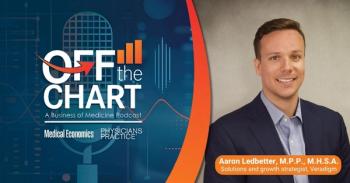
Seventy-nine percent of independent practice leaders say technology is what keeps them independent. Only 64% trust the tools they already have. Veradigm's Aaron Ledbetter explains what sits inside that gap, and why a denied claim still takes one to two weeks to reach the physician it belongs to.

Supporters hope a model in northeastern Pennsylvania could be replicated in other communities.

The clinician shortage is real, but there are other reasons why mental health referrals often go nowhere.
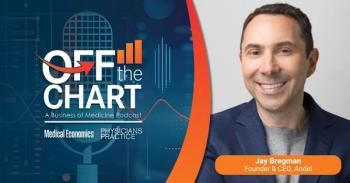
Jay Bregman of Andel says direct-to-employer purchasing takes prior authorization out of the prescription entirely, but the price a patient gets is tied to an employer's willingness to keep paying.

A JAMA analysis of nearly 250,000 board-certified internists puts hard numbers on how much underserved patient care rests on physicians born outside the U.S., just as visa policy tightens around them.
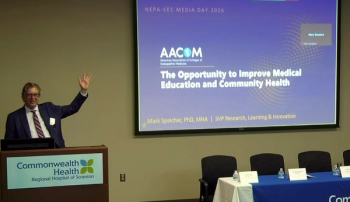
Supporters of osteopathic medical education hope Pennsylvania collaboration will be a model for the nation.

What happens when the CDC steps back from outbreak surveillance? We’re seeing it in real time, a doctor says

Shawntea Gordon of Atlas & Perpetua Healthcare Consulting says the cost most practices cut first is usually the one that was never the problem.
Advertisement
Advertisement
Trending on Medical Economics
1
Why Medicare’s 20% modifier 25 cut still penalizes same-day care
2
2027 Medicare Physician Fee Schedule: internal medicine, medical groups and telehealth advocates respond
3
Fewer hands, more patients: Clinic support staff shrinks as provider workloads climb
4
Primary care is still underpaid and federal policy could make access worse: report
5