

New national research shows health systems and health plans still can't get provider data right — and the fallout lands squarely on physician practices
New national research shows health systems and health plans still can't get provider data right — and the fallout lands squarely on physician practices
Kansas court records reviewed by The New York Times show the practice charged 18% annual interest, garnished bank accounts and pursued arrest warrants over balances as small as $101.

The Pay PCPs Act of 2026 would blend prospective per-patient payments with fee-for-service, halve beneficiary cost sharing for primary care and exempt participating physicians from MIPS.

A review of eight leading virtual chronic kidney disease management solutions found minimal cost savings and no clear evidence of slowed disease progression, according to the Peterson Health Technology Institute.

Rigid adherence thresholds in CMS's updated coverage decision leave doctors and suppliers guessing — and vulnerable patients at risk of losing a life-extending therapy
Health care economist Wayne Winegarden, Ph.D., says two decades of inflation-eroded Medicare payment, not corporate ownership, is what keeps pushing independent practices to sell.

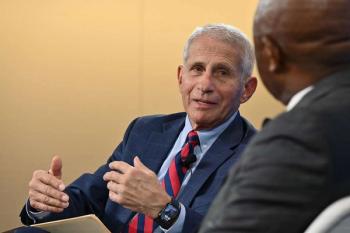
Since April, confidence in Anthony Fauci has fallen to just 50%, while Robert F. Kennedy Jr. is unchanged at 38%, in a survey fielded during the Senate contempt vote.

WalletHub scored all 50 states and Washington, D.C., on 16 vaccination metrics. The bottom 10 holds the state with the highest kindergarten exemption rate in the country, and one whose kindergarten coverage is among the highest anywhere.

WalletHub scored all 50 states and Washington, D.C., on 16 vaccination metrics.

A financial advisor breaks down what clients need to bring to the relationship, from full disclosure to setting clear communication expectations.

Security has become an operational crisis in the AI era

Defamation law protects a patient's harsh opinion but not a false assertion of fact, and HIPAA blocks a practice from answering either one with the facts.


Why credence-service marketing must make a physician's clinical judgment visible to patients, not just louder.

The gap between what reactive versus proactive tax management can deliver isn't theoretical, it's measurable.


Physicians reveal which channels give the most medical misinformation to patients
Anthony Orsini, D.O., says most physicians were never trained for the conversation that follows a medical error, and that how they handle it often decides whether the case ends in court.

A U.K. review of 27 papers found the evidence on ambient scribe risks thinner than the American adoption curve.

Researchers verified thousands of fake reviews posted by providers and clinic staff and found them longer, more clinically detailed and better received than the real thing. HIPAA leaves physicians very little room to respond.


With AI being used by both candidates and hiring managers, finding good employees in the resume pile can be challenging.

Quality, revenue, utilization, documentation and savings are not all the same thing

Why some health plans will emerge stronger while others face retrenchment

Emergency department self-pay visits rose from 5.5% to 7.6% of encounters, the steepest of four care settings tracked, while Medicaid's share declined across the board, according to Epic Research

Digital mental health tools can widen access to care, but they also create clinical and administrative work — enrollment, data review, escalation, documentation — that rarely gets budgeted for before launch.

Survey shows that physician pay growth is slowing, but some specialties fare better than others.

News & Analysis
An Annenberg Public Policy Center survey of 1,904 adults found 87% are confident in their own doctor, nurse or other primary care physician, compared with 59% to 61% for the three federal health agencies.
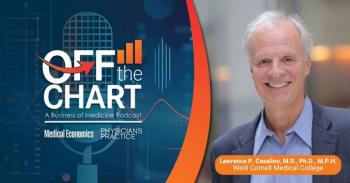
Lawrence Casalino, M.D., Ph.D., M.P.H., argues that as medicine consolidates, physicians are increasingly treated as interchangeable parts, and that the damage shows up in the parts of care no quality program measures.