
Despite calls to replace and repeal Obamacare, issues affecting physicians have received little attention in Cleveland.
Despite calls to replace and repeal Obamacare, issues affecting physicians have received little attention in Cleveland.
As a long-standing member of the Democratic Party, I have a confession to make. I am voting for Donald Trump. The journey from a man like Obama to a man like Trump was surprisingly short, forged as I started a small independent practice three years ago in the crucible that is healthcare.
Alvarado, a 46-year-old internist and pediatrician, will not be discussing healthcare during remarks, and will instead focus on immigration issues. In 2014, Alvarado became the first Hispanic elected to state office in Kentucky, according to the Courier-Journal in Louisville, Kentucky.
Physicians won’t have to start reporting quality under the Medicare Access and CHIP Reauthorization Act of 2015 (MACRA) until next July at the earliest, if the law’s co-author has his way.
When Bryan Hambley, MD, decided to attend a Donald Trump rally earlier this year, he had no idea it would lead to forming an anti-Trump physicians group and a protest march at this year’s Republican National Convention (RNC) in Cleveland. But that’s where Hambley finds himself as the convention gets underway.
A retired family physician and elected Republican delegate from New Jersey says he is pessimistic about a problem he doesn’t think Trump, the Republican Party or anyone for that matter can solve: The slow death of private practice.
On June 22, House Republicans announced proposals for a healthcare plan to replace the Affordable Care Act (“Obamacare”). Republicans claim the proposals would slow healthcare spending and ease federal rules for health insurance. Not surprisingly, a varied set of reactions to the proposals came quickly.
When it comes to healthcare policy, the official 2016 Republican Party platform under presumptive presidential nominee Donald Trump remains largely unchanged from the platform approved in 2012.
New strides toward better care and spending can stir up plenty of blowback along the way, but CMS has shown a willingness to listen and adjust, this time by allowing ACOs to jump aboard the Comprehensive Primary Care Plus (CPC+) train – an initiative with the potential to impact up to 5,000 practices, 20,000 providers and 25 million patients.
An APM can potentially serve as an opportunity for a practice or organization to generate new ways to improve their patient’s care while simultaneously developing a means to promote financial viability in the new ‘value driven’ system.
With the ever-growing armamentarium of new therapies available today, a conversation about prescription drug costs with patients is rapidly becoming a reality for every physician.
A successful DPC model makes the current version of the Affordable Care Act (ACA) even more unworkable than it already is.
Unfortunately, for many physicians, the professional rewards of status, security, and meaningful work are threatened by an avalanche of responsibility and stress characterizing today’s practice environment and further contributing to an escalating epidemic of physician stress and burnout.
While the vast majority of our physician graders flunked Obamacare, many primary care physicians praise aspects of the Affordable Care Act.
Scientists at Oregon Health & Science University have found a way to reprogram immune cells to recognize and attack early HIV infection.
Telling stories about people like them, or reminding them of a previous illness may be the best thing physicians can do to nudge patients toward flu shots.
HIT coalition says the medical field must measure all forms of information sharing today so it can accurately assess interoperability successes moving forward.
A Mayo Clinic report reveals many physicians are dissatisfied with EHRs and patient portals, saying they improve neither their efficiency nor patient care.
As a physician, you can’t afford to go it alone with your finances.
There’s no doubt about the high level of distress that people across the nation are feeling about the rising costs of prescription drugs.
How did we end up with yet another layer added to our healthcare delivery system? It might be an unintended consequence of hospitalist programs.
EHR errors and MOC frustrations are the hot topics of this issue's Your Voice.
From booking to billing, control your overhead.
Physicians treating Medicare patients may get some relief this year from the reporting requirements under the Meaningful Use rules, thanks to a bill in both houses of Congress. But that relief is far from guaranteed.
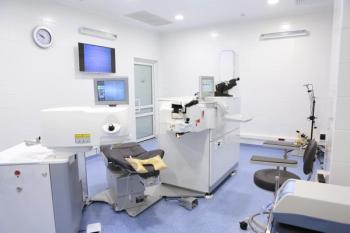
Doctors and hospitals in the U.S. spend nearly $200 billion per year on medical devices, according to a 2015 study by the Advanced Medical Technology Association.
Projects such as OpenNotes may transform how physicians and patients use and access medical records.
Dr. Google often dispenses advice before appointments-here’s how to handle being the second opinion.
Physicians may have an opportunity to engage with patients via text messaging as smartphones become ubiquitous.
Doctors now can bill Medicare for transitional and chronic care managment, but not everyone will benefit.
the United States healthcare system is neither responsible for, nor is it the cause of, social disparities that have compromised the health and lives of so many people in our country, which unfortunately fall disproportionately on those who reside in our minority communities.