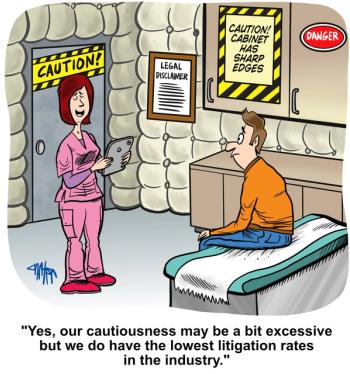
Trying to prevent malpractice suits is one thing, but this is ridiculous.
Trying to prevent malpractice suits is one thing, but this is ridiculous.

There are common misconceptions patients have about the disease that physicians can address

Addressing social determinants is where our health care system falls short.

The proposed rules released by the Department of Health and Human Services Office of Inspector General (OIG) and the Centers for Medicare & Medicaid Services (CMS) in October 2019 include new exceptions and safe harbors, as well as clarifications to the Physician Self-Referral (Stark) Law, the Anti-Kickback Statute and the civil monetary penalty prohibition against beneficiary inducements.

ACP made recommendations to address prices in two new policy papers

Gender bias in healthcare can be dangerous for women’s health

What’s next for bundled payment models?

Even though physicians have been able to bill CCM since 2015, they still run into problems in terms of getting paid.

The search giant’s secretive Project Nightingale gathering millions of health records from Ascension hospitals.

Tips for primary care physcians

What it is, what these firms want, and why your practice might be a target

Private practices have the most to lose when it comes to revenue cycle management.

A pair of HIPAA violations garnered more than $4 million in penalties.

While vaccination is mostly identified with immunizing children against diseases, providing vaccination services in a clinically and economically efficient way is foundational to the health of all patients and can add to a practice’s income stream.

Practices will need to step up their recruitment game to capture the attention of this year’s new physicians, says a new survey of final-year medical residents.

Experts say it’s too early to predict the severity of the flu season, or how effective the vaccine will be

The flu vaccine can help protect against more than just the flu. A new study reveals extended benefits, especially for the elderly.

Boston Scientific seeks to add to the arsenal of tools available to help manage chronic conditions at home via its fifth annual Connect Patient Challenge.

All physicians need to have a plan regarding medical malpractice tail coverage

All physicians need to have a plan regarding medical malpractice tail coverage

Doctors know that patients' expectations have an impact on the effectiveness of treatments. Less is known about the effect of providers' expectations for those treatments.

Despite quality of coverage, patients still burdened by healthcare costs

Fluzone High-Dose Quadrivalent has been approved for use in patients over 65 to help prevent A and B strains of influenza.

Doctors are avoiding opioids and patients who are prescribed them, despite government warnings against sudden discontinuation

By continuously deferring our own physiological needs, physicians harm not only ourselves, but also provide a disserve to our patients.

New survey finds that healthcare systems’ security is being wildly outpaced by hackers.

CMS has issued the final rule for Medicare’s 2020 Physician Fee Schedule (PFS), and it’s a win for primary care doctors.

An increasing number of physicians are exploring options outside large corporations

Artificial intelligence is not an innovation that we may see someday in the future. It’s here now

The AMA and a group of 19 U.S. Senators want to expand the reach of the Medicare Diabetes Prevention Program.