

Commentary|Articles|June 19, 2026
Why specialists are the key players in the next phase of value-based care
Author(s)Dana L. McCalley, MBA
Fact checked by: Richard Payerchin, Justin Mancini
Listen
0:00 / 0:00
For value-based care, the future is in building collaboration between primary and specialty care.
Advertisement
When physicians describe the forces reshaping medicine, they increasingly point not to a new device or a breakthrough drug but to the economics underneath their work. The move from fee-for-service to value-based payment is no longer theoretical. For a growing number of specialists, it is starting to feel personal.
That change in perception is worth pausing on, because
There is a structural reason for that. Much of the spending these models are designed to manage — advanced imaging, procedures, device costs, postacute utilization, the full arc of an episode from diagnosis through recovery — originates in specialty settings, not in the primary care office. Yet for years, the clinicians formally held accountable for total cost of care have been primary care physicians. How is that changing today?
Value-based care: Anchored in primary care
The dominant approach has been to anchor accountability in primary care. Primary care physicians are attributed a panel of patients, made responsible for managing the total cost and coordination of their care, and rewarded or penalized accordingly. That structure has accomplished a great deal. It established a foundation for population health, gave organizations a clear locus of accountability and demonstrated that coordinated care can lower costs without sacrificing quality. Much of what we know about making value-based care work, we learned through primary care.
Related coverage: Mastering the shift to value-based care: 3 strategies for organization-wide success
A changing model of care
But the same structure creates a real tension as specialists are drawn in. When the cost of an episode is driven by specialty decisions while the accountability and the financial upside sit with primary care, specialists can find themselves evaluated — and, in practice, indirectly managed — without a clear role in governance or a meaningful share of the rewards. Many are willing to participate, but only on the condition that their contributions to outcomes, efficiency and cost management are recognized and compensated in a way that feels both clinically and financially fair.
Bridging that gap has proven difficult, and the difficulty is not mainly technical. It is a question of model design. A specialist asked to change referral patterns, reduce avoidable imaging or coordinate more tightly around an episode is being asked to do real work and, often, forgo revenue the fee-for-service world would have rewarded. If the model offers no shared savings, no seat in decision-making and no data showing how their choices affect the broader picture, the arrangement reads less like a partnership than a cost control imposed from the outside.
The path forward is to design models that treat specialists as participants rather than as line items to be managed. In practice, that means a few things. It means episode- and condition-based arrangements that hold specialists accountable for what they actually influence rather than folding their performance into a primary-care metric. It means shared-savings and governance structures that give specialty groups a genuine stake and a genuine voice. And it means closing the data gap: making sure specialists can see the same picture of attributed patients, utilization and total cost of care that primary care providers and payers already work from. Incentives, workflows and data have to align across the care team, not just within one part of it.
Collaboration for evolution
None of this requires abandoning what primary care-led models built. It requires extending the logic of accountability outward so that the clinicians who drive much of the spending also help govern it. The alternative — bolting specialists onto an existing structure without changing the structure — risks reproducing the very silos value-based care was meant to dissolve, only under a new payment label.
What is encouraging is that specialists are no longer waiting to be invited. Concerns about cost, access and misalignments with patient priorities are pushing them to engage rather than opt out. Specialists are showing up to the conversation. Will the models be redesigned to make room for them?
Value-based care has spent a decade proving that coordinated, accountable care is possible. The next decade will be defined by whether it can be made genuinely collaborative across primary and specialty care alike or whether it stalls at the boundary it has not yet learned to cross.
Dana McCalley, MBA, is the vice president of value-based care at
Advertisement
Related to this article
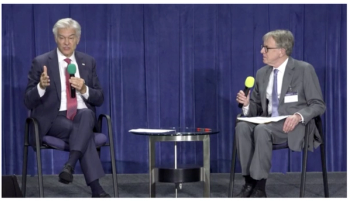
CMS chief says outcomes-based pay can help patients while finally ending physicians' box-checking frustration.

Four forces created the perfect storm to sink physician-owned medicine. There are policies that could help keep it afloat.

A primary-care voucher model would pay practices upfront for predictable care and leave insurance to cover catastrophic risk, cutting administrative burden and giving physicians time back with patients.

Rachel Brace and Nicole Hart of BackPocket Talent say private practices lose strong staff when employees can't see where their jobs lead.
The top news stories in medicine this week.

Current quality programs measure organizations and claims after the fact, but the next generation of measurement focuses on the everyday clinical decisions that drive unnecessary spending.

A randomized trial found a FORTA-based, pharmacist-led medication review sharply reduced inappropriate prescribing, overuse and underuse among older cancer patients with polypharmacy.
Advertisement
Advertisement
Trending on Medical Economics
1
No-MCAT medical school pathway aims to keep physicians in Arkansas
2
How private practice owners can weigh staff raises against the cost of turnover
3
CMS cancels ACA coverage for 760,000; bill would ban corporate ownership of practices; physician pay rises in every specialty group — Morning Medical Update Weekly Recap
4
Independent practice on the road to extinction: Why the next generation won't own the stethoscope, let alone the building
5