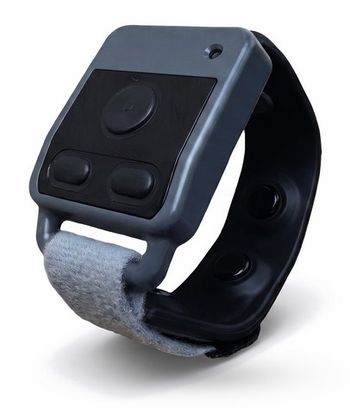
Encora X1, an FDA-cleared wrist device, uses mechanical rather than electrical neurostimulation, giving VA clinicians an option for patients who can't tolerate medication or have implanted electrical devices.
South Korean company plans U.S. launch through partnership with sensor technology firm
South Korea-based medical technology company SKIA said it has received
The tablet-based system uses
Unlike conventional surgical navigation systems that rely on large, stationary equipment, SKIA HEAD operates on a portable tablet platform. The company said the system integrates with high-precision Structure Sensors that scan and map a patient's anatomy and surroundings, helping maintain accurate alignment of the augmented reality images throughout a procedure.
SKIA said it plans to enter the U.S. market through a partnership with Structure, a company that develops three-dimensional sensing technology. The companies aim to combine Structure's sensor platform with SKIA's software to expand access to augmented reality-guided surgery.
"FDA 510(k) clearance validates that our technology meets stringent regulatory requirements and is suitable for efficient clinical workflow support," SKIA CEO Jong-Myoung Lee said in a statement. "This milestone, combined with our partnership with Structure, accelerates our efforts to bring practical AR guidance to the global surgical community."
The clearance marks the latest regulatory milestone for the company, which has already commercialized other augmented reality surgical products in Asia.
According to SKIA, its SKIA Body platform has been used in more than 80 hernia surgeries in India. The company has also received two approvals from South Korea's Ministry of Food and Drug Safety for its SKIA Body and SKIA Face products.
SKIA said it is conducting a confirmatory clinical trial for its SKIA Breast platform in collaboration with Seoul National University, Yonsei Severance Hospital and Ewha Womans University Hospital. The company is also developing augmented reality systems for breast cancer surgery, gastrointestinal procedures and forensic applications.
The company said its technology could offer a lower-cost and more accessible alternative to traditional surgical navigation systems, potentially expanding the availability of advanced imaging guidance to smaller hospitals and outpatient surgical centers.