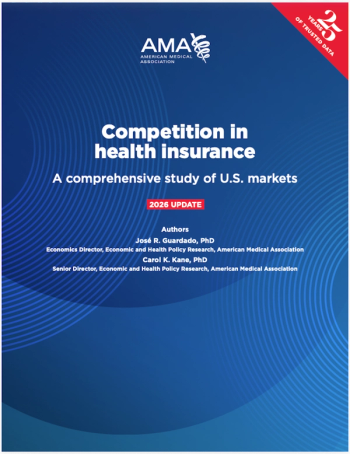
New AMA data show limited insurer competition in commercial and Medicare Advantage markets, which can cut into physicians’ negotiating power and payment.
U.S. Preventive Services Task Force is poised to end 20-month hiatus with meeting starting today.
The U.S. Preventive Services Task Force (USPSTF) apparently will convene for its first substantial clinical deliberations in more than a year and a half.
On Nov. 18, the U.S. Department of Health and Human Services’ Agency for Healthcare Research and Quality (HHS-AHRQ) announced USPSTF would convene for a two-day session starting Nov. 19.
It appeared it would be the first time the panel has met to discuss recommendations on primary care screenings and disease prevention since March 2025. The task force members did meet in September for a two-day orientation session “during which AHRQ staff and current members briefed them on the Task Force’s mission and history, its methods for reviewing evidence, and how it prioritizes topics and members’ responsibilities,” according to an AHRQ announcement.
The panel has become another government advisory board with uncertain status under the tenure of HHS Secretary Robert F. Kennedy Jr. In September, Kennedy named eight new members to USPSTF. On Sept. 30, they and the existing members were sworn in to four-year terms.
The group includes “some of the most accomplished national experts ever to serve on the task force,” the AHRQ announcement said. The statement included a summary of the panel’s duties and affirmed Kennedy’s commitment to prevention in the goal of making America healthy again.
“Members review the best available evidence on preventive services, weigh benefits and potential harms, and develop recommendations that inform doctors, other providers, and patients,” the AHRQ statement said.
“Prevention should be one of the most powerful tools in American medicine,” Kennedy said, as cited in the AHRQ statement. “We should identify disease early, prevent it when we can, and give doctors and patients the best evidence to make decisions about their health.”
As of late afternoon Nov. 18, the
USPSTF is one of the federal government’s most influential but least visible health panels. Its recommendations determine which cancer screenings, counseling services and preventive medications insurers must cover at no cost to patients. The voluntary board generally has met three times a year and last met in March 2025. Even without meeting, USPSTF had a
The task force current members are: