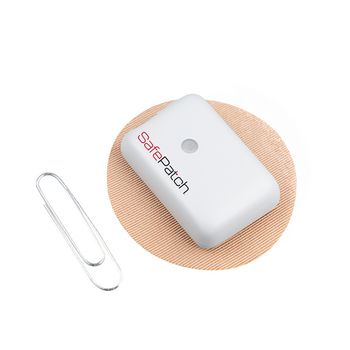
Cerna Healthcare's SafePatch is a wearable skin patch that detects falls, tracks activity and sends emergency alerts to family or professional monitors, with shipping set to begin in October.
The 510(k)-cleared, CE-marked laptop systems bring AI-powered imaging and workflow tools to point-of-care settings outside traditional imaging departments
GE HealthCare has introduced the LOGIQ e family of compact, laptop-style ultrasound systems, adding two new models — LOGIQ e X and LOGIQ e S — aimed at bringing console-level imaging performance to point-of-care settings outside traditional imaging departments.
Both systems are 510(k) cleared and CE marked, the company said.
Building on the earlier LOGIQ e platform, the new systems pair a compact, portable design with
"Healthcare delivery is changing rapidly, and imaging technology must evolve with it. Clinicians today need imaging solutions that can move seamlessly across care settings while supporting a variety of users and clinical applications," Karley Yoder, CEO of Ultrasound Solutions, Advanced Imaging Solutions at GE HealthCare, said in a statement. "The LOGIQ e family furthers our ability to serve customers with solutions that balance portability, performance and workflow, while bringing the right imaging capabilities to the right clinical environments."
The LOGIQ e family is designed to support multi-purpose imaging, musculoskeletal exams, emergency medicine, critical care, rheumatology and anesthesiology, the company said.
The two models target different segments of that market. LOGIQ e X is positioned as the premium option, combining AI-powered tools, advanced imaging capabilities and workflow features. LOGIQ e S is designed to deliver essential imaging capabilities in a more affordable, intuitive package, according to GE HealthCare.
Both systems include workflow tools such as Scan Assistant and Voice Control, which are designed to reduce manual interactions and speed up exams in busy clinical environments, the company said.
Depending on configuration and region, LOGIQ e X also includes AI-powered tools intended to assist with image acquisition and workflow efficiency. Nerveblox labels anatomical landmarks in ultrasound images to help clinicians during peripheral nerve block procedures, while MSK Gov is designed to identify anatomical structures during musculoskeletal ultrasound exams, according to the company.
Additional imaging tools available on the system include B-Flow, which provides real-time imaging of blood flow; Speckle Reduction Imaging-HD, which is designed to improve visibility of organs and lesions; Automated Function Imaging, which assesses structural heart defects across the left ventricle, right ventricle and left atrium; and SonoBiometry, which automates fetal head, abdomen and femur measurements to reduce keystrokes during biometry exams, the company said.
GE HealthCare also offers Verisound digital tools depending on product configuration and region. Verisound Fleet is a cloud-based fleet management tool designed to help organizations manage multiple systems remotely, including configuration and backup. Verisound Collab supports virtual collaboration and real-time system usage sharing among clinicians. LOGIQ e X also supports compatibility with the company's Vscan Air probe, allowing for wireless, cable-free scanning, according to GE HealthCare.
The launch reflects a broader shift among device makers toward compact, AI-assisted ultrasound systems built for use outside dedicated imaging suites. As health systems look to expand diagnostic imaging into primary care, emergency departments and outpatient clinics, manufacturers have increasingly focused on portability, automated image optimization and wireless connectivity to make scanning accessible to a wider range of clinicians. That shift has coincided with growing interest in
Vicente Roques Escolor, MD, an anesthesiologist who uses the system, said portability is essential to his work across multiple clinics.
"What first caught my attention with the LOGIQ e is its design but beyond it being appealing is its performance, it's very practical, easy to use and simple," Roques Escolor said in a statement provided by GE HealthCare. "I was also impressed by the possibility of using artificial intelligence, specifically the Nerveblox tool, which allows the scouting of the different structures we see in a large number of regional anesthesia techniques before performing the intervention."