American Osteopathic Association leaders discuss the profession’s record growth, its training pipeline and the pressures facing practicing physicians.
American Osteopathic Association leaders discuss the profession’s record growth, its training pipeline and the pressures facing practicing physicians.
Osteopathic medical schools are training more future physicians than ever. Enrollment reached a record 41,001 students this year, more than one in four U.S. medical students, and the Commission on Osteopathic College Accreditation (COCA) now accredits 46 colleges teaching at 73 campuses, up from 43 colleges and 70 campuses in 2025.
A record 93.2% of DO seniors matched in the 2026 Main Residency Match, close to the 93.5% match rate for U.S. MD seniors reported by the
The growth is reaching states that have had the fewest osteopathic physicians (DOs). According to the American Osteopathic Association’s (AOA) 2026 Osteopathic Medical Profession Report,
Still, the nation faces a
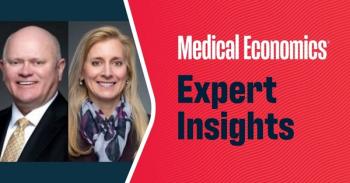
Medical Economics spoke separately with AOA President Richard R. Thacker, D.O., MACOI, associate dean of clinical sciences at the Alabama College of Osteopathic Medicine, and AOA CEO Kathleen S. Creason, MBA, about how to train and place more physicians. Their answers are grouped by topic, and this transcript has been edited for length and clarity.
Kathleen S. Creason, MBA: The issue that is most challenging for the physician pipeline is the number of residency programs. Our Washington office vigorously supports policies that expand residency programs, particularly in rural and underserved areas.
A really important point is that it’s not as much of a physician shortage, although there is one, as much as it is a maldistribution. The osteopathic profession fills that niche, disproportionately serving in rural and underserved areas. If you can get residency programs, particularly in rural and underserved areas, physicians tend to stay and practice where they performed their residencies.
Richard R. Thacker, D.O., MACOI: It has to be a calling, first of all. And by the way, the nursing shortage is even more critical than the physician shortage. I’m very concerned about that. In our profession, as I mentioned, we’re young. The majority are under 45, so that speaks well for our future. The nurses, they’re over 45, the majority. This is a real concern, because they need work-life balance, too.
But health care has to be a calling, just like a career in the military, the clergy or law enforcement. That’s dedication and sacrifice, and that’s what a person has to understand first and foremost.
[In a follow-up statement, Thacker added:] As it pertains to primary care, graduates could be better incentivized to go into family medicine, and bureaucratic burden could be lessened. The cost of education overall is too high, and the litigious approach is intimidating.
Kathleen S. Creason, MBA: It is a challenge. So yes, it is a matter of making sure that we have the appropriate investment. One of the things we fight for on the national level routinely is making sure that teaching health centers, as an example, remain funded for residency programs, and not just for one year or two years. Residency programs are three to seven years, so if the funding is not confirmed for the entire residency track, programs aren’t going to be willing to entertain the concept of a residency program.
The issue of rural hospitals closing is very concerning. Every time a hospital closes, if they had residency programs there, those residencies go away, and that is exactly the converse of what we need.
Kathleen S. Creason, MBA: The Commission on Osteopathic College Accreditation maintains the standards for establishing osteopathic medical schools, and they have very stringent standards for quality. They ensure that new osteopathic schools are able not only to produce well-educated physicians, but also to establish an appropriate number of rotation slots and residency slots, so that those medical students, once they graduate, have the opportunity to go on to training in the specialties they wish to train in.
That is an area COCA has focused very strongly on, because with the increased number of schools, we also have to make sure that we have preceptors, that we have osteopathically focused preceptors, and that we have enough residency programs for all graduating students. That is absolutely critically important.
Richard R. Thacker, D.O., MACOI: If osteopathic school was easy, would everybody be doing it? There are no gimmes. You earn your way into school, and you earn it every day to remain in school. Once you come into our college or any other, we’re very invested in the success of our students. We want you to complete your studies, but we don’t dumb it down for anybody. We don’t turn the volume down or the pace. You have to keep up and show up and do your utmost to be a well-trained physician, heavily rooted in primary clinical skills.
Whether you go on to be a pediatric oncological neurosurgeon — great, we want to help you get there. But if you’re a well-rounded primary care physician in terms of your teaching, your learning and your approach, that’s going to make you a better specialist. And if you can appreciate community-based training in smaller underserved or rural areas — or go work in Brooklyn, go work in downtown New Orleans — you’re going to see some of the same pathologies and the same issues with access to care. That certainly meets our mission: to serve people and to be in the places where we’re needed most.
We have to pass licensing exams just like everyone else, and meet criteria on a state-by-state level as well as nationally. There’s a single accreditation system for graduate medical education. DOs and MDs are all applying to the same programs, and they’re working and training side by side. And we’ve had a record Match. The percentage of our graduates matching into these programs is almost exactly the same as our MD cousins.
We’re also much more aware of burnout on our campuses today than we were years ago. There are now actual laws in place, state by state, as well as federal guidelines on how much you can work during your training, for how long, and rest periods before the next shift. These were definite needs and upgrades to the training process.
Kathleen S. Creason, MBA: State-level policy is very important to the medical community. It depends on things like the tax implications, the incentives and the requirements. Every state has its own requirements and its own challenges, and those can certainly have an impact on where physicians practice. Some states are offering tax incentives for physicians to move into the state, particularly in rural and underserved areas, and that’s certainly a draw. If states have federally qualified health centers available for physicians to consider loan repayment, that is very much a draw, particularly with the loan burden placed on osteopathic and allopathic medical students currently.
Kathleen S. Creason, MBA: Osteopathic physicians have a great deal of respect for non-physician clinicians and fully believe in the philosophy of team-based care, with the physician as the lead of that team. Whenever I talk to physicians about scope of practice, what I consistently hear is, “I didn’t know what I didn’t know before I went through medical school.”
There are a number of physicians who were pharmacists, acupuncturists, physician assistants or nurses before they entered osteopathic medical school. As such, they have a really good understanding of the education and knowledge level of non-physician clinicians, which is very appropriate and relevant to that level of practice. But when you’re talking about more complex cases and more complex issues, physician engagement and involvement is absolutely critical.