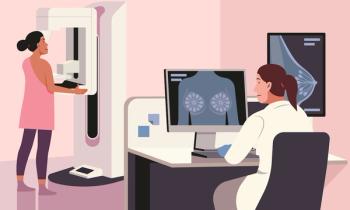
A Hologic survey of 1,000 U.S. women aged 35 to 75 found that a direct recommendation from a physician was the top motivator for overdue patients, while knowledge gaps about cost, radiation and breast density persist.
An Oregon Health & Science University-led analysis of nearly 200,000 people found a 20% to 30% higher rate of fatty liver disease and cirrhosis among those who reported eating after dinner or after bedtime.
People who report eating late at night, either after dinner or after going to bed, have a higher risk of liver disease, including metabolic dysfunction-associated steatotic liver disease (MASLD) and cirrhosis, according to new research led by Oregon Health & Science University (OHSU).
The study, published in
Previous research has tied late-night snacking to heart disease and obesity. The OHSU team set out to see whether late-night eating also carried a signal for liver disease.
"A few studies have hinted at this idea but this is among the first long-term analyses to explicitly draw the connection to fatty liver disease," said lead author Robert Wilechansky, M.D., an OHSU hepatologist who specializes in liver transplantation.
Wilechansky said night shift workers, whose schedules disrupt the body's natural day-night cycle, have elevated rates of obesity and heart disease. Because as much as 30% of the U.S. population is affected by
"We know the liver is very much in tune with the body's circadian rhythms," he said. "So we're interested in changing the timing of eating in a way that could make a difference in health without changing the composition of what people eat."
Researchers drew on three large, existing national datasets: the Nurses' Health Study, the Nurses' Health Study II and the Health Professionals Follow-up Study. They pulled self-reported diet and lifestyle information from almost 200,000 participants across the three cohorts, grouped participants by eating behaviors and looked for correlations with reported fatty liver disease or cirrhosis.
Wilechansky said the absolute risk of severe disease remains limited, but the timing signal is worth noting.
"It's important to remember, of the people who developed fatty liver disease, only a small fraction develop serious forms of the condition like liver cirrhosis," he said. "Even so, the big take-away here is that confining your calorie intake to several hours before bedtime might be beneficial."
Co-author Andrew McHill, Ph.D., an associate professor and sleep and circadian physiologist at OHSU, said the findings add to a growing body of evidence that the body clock plays a central role in overall health.
"We are seeing over and over again that the timing of behaviors, whether it's sleep, eating, or exercise, really matters," McHill said. "For example, we have shown that eating during the night, when the internal biological clock is promoting sleep, reduces the ability of your body to metabolize foods as efficiently and can eventually lead to obesity, diabetes and now poor liver health."
McHill noted that earlier research in animal models has shown the liver to be one of the organs most susceptible to misalignment between eating and sleep timing.
Wilechansky cautioned that the study is observational and relies on broadly defined, self-reported data, so it cannot establish that late-night eating causes liver disease. He said the findings instead offer a starting point for further research.
He is part of an OHSU team recruiting participants for a clinical study that will monitor eating behaviors directly and assess whether eating earlier improves clinical measures of underlying fatty liver disease.
"Our findings add to the growing body of literature linking late-evening eating patterns to adverse metabolic and liver outcomes," the authors wrote.
The OHSU findings come as clinicians and researchers look more closely at when patients eat, not only what and how much they eat. The field, sometimes called chrononutrition, rests on the idea that metabolic organs such as the liver, pancreas and adipose tissue run on their own internal clocks, and that eating out of sync with those clocks may change how the body handles glucose and lipids.
That question matters for primary care because MASLD is now the most common chronic liver disease, and it frequently travels with obesity, type 2 diabetes, hypertension and dyslipidemia. The 2023 shift from "nonalcoholic fatty liver disease" to MASLD was meant to put metabolic dysfunction at the center of the diagnosis, which reinforced lifestyle modification as the foundation of management for most patients.
Most lifestyle counseling for MASLD focuses on weight loss, diet quality, physical activity and alcohol reduction. Meal timing is a less familiar lever, but it may appeal to some patients because it asks them to change when they eat rather than overhaul their diet. Controlled trials of time-restricted eating and earlier eating windows have reported mixed but often favorable effects on metabolic markers. Researchers generally agree that larger and longer trials are needed before specific timing recommendations make it into clinical guidelines.
Shift workers are a particular concern. Overnight schedules make late eating hard to avoid, and studies have repeatedly linked