

News|Articles|September 16, 2026
Fewer Americans say measles vaccines are safe for kids; cardiovascular disease now kills more Hispanic adults than cancer; lumateperone and sexual function in depression — Morning Medical Update
Author(s)Austin Littrell
Fact checked by: Keith A. Reynolds
Listen
0:00 / 0:00
Key Takeaways
- Polling indicates 76% of U.S. adults consider MMR vaccination safe for children, down from 84% in 2020, yet majorities across parties still support vaccination.
- Epidemiology shows >3,000 confirmed U.S. measles cases in 2026, with outbreaks in PA, UT, and SC and kindergarten coverage below the 95% herd-immunity threshold.
The top news stories in medicine today.
Advertisement
Fewer Americans say measles vaccines are safe for kids
Pennsylvania has reported three measles-related deaths in recent weeks.
Some 76% of Americans say vaccines against measles, mumps and rubella are safe for children, according to
The U.S. has recorded more than 3,000 confirmed measles cases in 2026, the most in 35 years, and is widely expected to lose its measles elimination status later this year, Reuters reported. Outbreaks have hit Pennsylvania, Utah and South Carolina. U.S. Centers for Disease Control and Prevention data show average vaccination coverage among kindergartners is below the 95% level experts say is needed for herd immunity.
Cardiovascular disease now kills more Hispanic adults than cancer
On average, Hispanic adults have a first stroke 6 to 8 years younger than white adults.
Cardiovascular disease has surpassed cancer as the leading cause of death among Hispanic adults in the U.S., according to a new American Heart Association scientific statement. About 44% of Hispanic adults have high blood pressure, and 15.5% have type 2 diabetes, nearly twice the prevalence among white adults. Hispanic adults are diagnosed with heart failure about 8 to 9 years younger than white adults.
Roughly 20% of Hispanic adults were uninsured in 2023, compared with 6.4% of white adults. The
Add-on lumateperone improved sexual function as depression eased
Among patients with baseline sexual dysfunction, 26.3% on lumateperone reached normal sexual function, versus 15.2% on placebo.
Adding the atypical antipsychotic Caplyta (lumateperone) to antidepressants improved sexual function compared with placebo in a
After adjusting for improvement in depressive symptoms, lumateperone's effect on sexual function was no longer statistically significant, the authors reported. The add-on "may be preferable for some individuals" hoping to avoid sexual side effects, said lead researcher Anita H. Clayton, M.D., of UVA Health. Lumateperone maker Intra-Cellular Therapies funded the study, published in The Journal of Clinical Psychiatry, and five of its six authors are current or former company employees.
Advertisement
Related to this article

New specialists' schedules fill quickly, the authors of an NEJM Catalyst analysis write, and changing how existing clinicians are used may do more to shorten waits.

In a University of Toronto simulation, AI scribes cut documentation from 36.3% of each primary care visit to 11.2%, though total visit length didn’t change significantly.

A study published in Advanced Science used three AI models to screen thousands of approved drugs, identifying nine that inhibit Streptococcus pneumoniae, a bacterium increasingly resistant to antibiotics.

Reactions from five leading organizations were among thousands of public comments on the draft document.

Independent practices don't need more billing staff — they need better workflows before the claim is ever filed.

The second annual Healthcare Workforce Barometer finds employers underestimating how many employees are ready to move, while interest in AI skills cools on both sides.
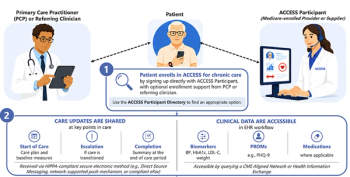
Physician groups back ACCESS Model but warn CMS against care fragmentation
Advertisement
Advertisement
Trending on Medical Economics
1
New Medicare ACCESS model aims to reward results, not volume, for chronic disease care
2
59% of health care workers plan to look for a new job in the next year, Harris Poll finds
3
10 ways AI is creeping into medical care
4
Saving America's primary care system requires bold action now
5