





Policy
Latest News

Advertisement
Latest Videos

Shorts
1:02
The shocking truth about health care fraud in America
3 months ago
by
Gary Jacobs

0:36
Why interoperability is actually a money problem
3 months ago
by
Sandra Johnson
1:12
Why health insurance premiums keep climbing
3 months ago
by
Gary Jacobs
0:58
Why primary care physicians are burning out
3 months ago
by
Gary Jacobs
1:10
Congress keeps playing chicken with physician pay
3 months ago
by
Anders Gilberg
0:32
The No. 1 change needed in the U.S. health care system
3 months ago
by
Gary Jacobs

0:53
Use the widget test to craft better hospital and health system policy
3 months ago
by
Lawrence P. Casalino, M.D., Ph.D., M.P.H.

0:39
The biggest problem in health care IT
3 months ago
by
Joseph Kleiman
0:43
The dangerous link between AI and siloed data
3 months ago
by
Sandra Johnson
0:48
Why I became a doctor — and the honor of the profession
3 months ago
by
Lawrence P. Casalino, M.D., Ph.D., M.P.H.
Podcasts







Advertisement
More News

As the outbreak continues, here’s what physicians need to know about diagnosing cyclosporiasis this summer

Joanne Frederick of Government Market Strategies argues the fix for runaway health care costs turned out worse than the problem it solved.
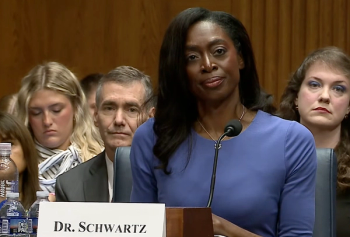
The 51-44 vote ends a yearlong vacancy atop one of the nation's top health agencies.

A physician's FAQ guide to Medicare's visit-complexity add-on code

CMS is right to go after wasteful spending, but should use AI technology for accountability, not more prior authorizations

WalletHub ranked all 50 states and the District of Columbia on 44 measures of cost, access and outcomes.

Just 49% of adults can now consistently afford needed care and medications

WalletHub ranked all 50 states and the District of Columbia on 44 measures of cost, access and outcomes.

Structural financial incentives explain why value-based care has stalled — even as new data and payer-provider strategies show where the model is already working.

Medicare is requesting information, including physician commentary, on primary care and MAHA.
Michigan pediatrician explains what physicians need to watch for in patients

The top news stories in medicine this week.

Physicians drive savings, but AI could reward the intermediaries controlling ACOs.
The 13-10 vote sends Trump's third CDC pick to the full Senate, where a confirmation vote may not come until September.

Clinics and physician practices accounted for almost 30% of health care Chapter 11 filings in the first half of 2026, the one subsector climbing while the rest trended flat or down, according to a new Gibbins Advisors report.
A pediatrician at the center of the country's largest cyclospora outbreak on why the official case counts are almost certainly too low, and what most labs aren't looking for.
2027 Medicare Physician Fee Schedule at heart of Primary Care Collaborative discussion

Gary Jacobs argues the payment system is what makes small practices unsustainable, and that the physicians who wait it out usually end up selling to a hospital rather than choosing their own exit.

The OIG's own data suggest a narrower fix than the one CMS proposed

Medicare rates, prior authorization, telehealth and Medicaid coverage all change between Sept. 14, 2026, and Jan. 1, 2028.

Dan D'Orazio of Sage Growth Partners says there are just too many obstacles for the American health system to fully embrace value-based care

Another conversion factor cut is on the table for 2027, and MGMA's Anders Gilberg breaks down why budget neutrality keeps forcing cuts in one specialty to pay for another and what the end of MIPS means for physicians.
The top news stories in medicine this week.

The corporate medicine crackdown is hitting the wrong target, says economist Wayne Winegarden, Ph.D.
Health care economist Wayne Winegarden, Ph.D., argues that two decades of inflation-eroded Medicare payment, not corporate ownership or management services organizations, is what is pushing independent practices to sell.

A framework published in npj Digital Medicine ranks patient care and staff experience alongside price, and says a health system that cannot score a tool across all five domains may not be ready to buy it.
Advertisement
Advertisement
Trending on Medical Economics
1
Florida's dengue outbreak: What physicians need to know now
2
AI system outperforms physicians on diagnostic accuracy in Microsoft study
3
Pay cuts, payer AI and the staff who keep leaving: What we heard at MGMA's 100th annual conference
4
Your AI scribe is saving you time. Is it also building the case against you?
5