

Legal
Latest News
Advertisement
Latest Videos
Shorts
3:53
PA sues Character.AI; UHC cuts prior auths 30%; 53% of doctors unsure on medicine — Morning Medical Update Weekly Recap
6 months ago
by
Austin Littrell
0:41
The hidden risks of shadow AI
6 months ago
by
Asha Palmer, J.D., CCEP, LPEC
4:07
Trump taps radiologist Nicole Saphier for surgeon general, pulls Casey Means' nomination; medical malpractice trends; AMA and Congress vs. AI chatbots — Morning Medical Update Weekly Recap
6 months ago
by
Austin Littrell
1:28
Compliance must-haves for small practices
6 months ago
by
Shannon Sumner, CPA, CHC
0:38
Telehealth risks: Don't forget this!
6 months ago
by
Shannon Sumner, CPA, CHC
0:48
Is AI putting your medical practice at risk?
6 months ago
by
Shannon Sumner, CPA, CHC
1:01
Under investigation? Take these steps
6 months ago
by
Shannon Sumner, CPA, CHC
0:51
Questions every practice must ask before using AI
6 months ago
by
Dan Silverboard
0:53
The hidden contract risks in concierge medicine
6 months ago
by
Ericka L. Adler, JD
0:54
Legal essentials for health care AI vendor contracts
6 months ago
by
Dan Silverboard

Advertisement
More News

Untangling visa programs health care employers use
Don't let your practice be a victim of - or complicit with - fraudsters
Peter Reilly, North American health care practice leader at HUB International, joins the show to break down the top risks facing physician practices in 2026.
What medical practices need to know about risk in 2026
What medical practices need to know about risk in 2026
What medical practices need to know about risk in 2026
A conversation with Peter Reilly, North American Healthcare Practice Leader, HUB International
Our 96th annual Physician Report, released in August, features exclusive data on physician compensation, practice financial health and more.
Malpractice insurance costs are rising as claim severity increases. Consider these strategies to save money and navigate today's challenging insurance landscape effectively.
Common diagnostic challenges can turn preventable conditions into catastrophic clinical and financial outcomes, but practices can take action to strengthen diagnostic processes and reduce risk.

New JAMA analysis tracks employer-sponsored insurance, wages and inflation from 1999 to 2024.
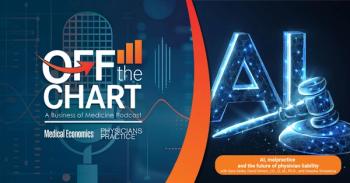
Sara Gerke, M.A.; David A. Simon, J.D., LL.M., Ph.D.; and Deepika Srivastava join the show to talk about malpractice and physician liability in cases involving artificial intelligence.
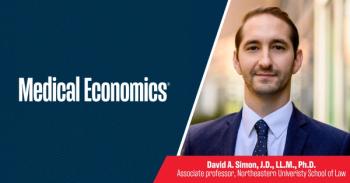
How will artificial intelligence reshape the rules of medical malpractice? Northeastern University’s David Simon unpacks the legal, ethical and practical dilemmas now confronting physicians, hospitals and AI developers.
David Simon, J.D., LL.M., Ph.D., looks ahead at how widespread AI adoption may de-skill physicians, trigger early waves of litigation and push courts to create new legal norms for medical technology.
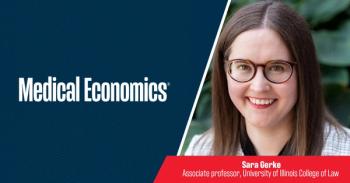
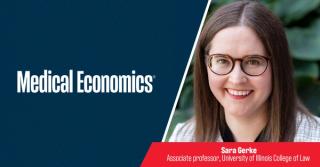
Sara Gerke discusses her proposal for AI “facts labels,” arguing that transparency in device labeling could help physicians, health systems and regulators share accountability.
David Simon, J.D., LL.M., Ph.D., says AI could cut malpractice claims if it becomes part of the accepted standard of care — but shift liability toward manufacturers in product defect cases.
Sara Gerke shares new findings from the CLASSICA project, revealing how surgeons view AI liability — and why shared accountability may be the future of malpractice law.

State-level scrutiny of private equity in health care intensifies as new laws emerge, shifting focus from federal antitrust enforcement.
David Simon, J.D., LL.M., Ph.D., contrasts the European Union’s proactive approach to AI oversight with the U.S. system’s reliance on courts and the FDA — and argues for a middle path balancing innovation and accountability.
David Simon, J.D., LL.M., Ph.D., explores how public skepticism toward “robot diagnosis” could shape future court decisions, even as confidence in AI’s accuracy grows over time.
Sara Gerke explains why jurors may soon see following an AI recommendation as the “reasonable” choice, even when it diverges from traditional medical standards.
David Simon, J.D., LL.M., Ph.D., explains why AI outputs are unlikely to define medical negligence — unless courts first determine that the AI itself represents the standard of care.
David Simon, J.D., LL.M., Ph.D., examines the unresolved gray areas between physicians, hospitals and AI manufacturers when errors occur.
Drawing from past device litigation, David Simon, J.D., LL.M., Ph.D., outlines how product liability claims against AI developers and device makers may mirror — and expand upon — traditional malpractice law.
David Simon, J.D., LL.M., Ph.D., discusses how AI could gradually reshape the legal definition of the “standard of care," and what happens when not all physicians or systems have equal access to these tools.
Advertisement
Advertisement
Trending on Medical Economics
1
Rural Missouri health center that delivers more than 525 babies a year with two OB/GYNs lands $540,000 for obstetric staffing
2
AI system outperforms physicians on diagnostic accuracy in Microsoft study
3
Midterms could give Democrats leverage on Medicaid cuts and ACA subsidies, policy experts say
4
How actuarial AI could tell physician groups where a value-based contract stands midyear
5