






Practice Finance
Latest News
Advertisement
Latest Videos






Shorts
0:32
The No. 1 change needed in the U.S. health care system
2 months ago
by
Gary Jacobs

1:20
What is an independent medical practice?
2 months ago
by
Wayne Winegarden, Ph.D.
1:33
Should your practice join a management services organization?
2 months ago
by
Wayne Winegarden, Ph.D.
1:09
Loosening MSO rules could unlock hospital innovation
2 months ago
by
Wayne Winegarden, Ph.D.
0:45
How inflation is killing independent practice
2 months ago
by
Wayne Winegarden, Ph.D.

1:28
What low overhead actually looks like in direct primary care
3 months ago
by
Josh Umbehr, M.D.

4:32
Can the next CDC director say no to RFK Jr.?
3 months ago
by
Austin Littrell

0:40
Patients love a grumpy doctor who picks up the phone
3 months ago
by
Josh Umbehr, M.D.

0:43
Why physician pay can feel like 'funny money'
3 months ago
by
Michael Jerkins, M.D., M.Ed.(+1 more)

1:38
Why your practice isn't worth what you think it is
3 months ago
by
Andy Colbert
Podcasts










Advertisement
More News

There a six recurring errors that leave independent practices financing equipment on terms mismatched to how they actually get paid.

Lawrence Casalino, M.D., Ph.D., M.P.H., argues that as medicine consolidates, physicians are increasingly treated as interchangeable parts, and that the damage shows up in the parts of care no quality program measures.

News & Analysis
AAFP issued its fall COVID-19, flu and RSV recommendations Wednesday, saying it coordinated with three other societies, while the coverage rules, counseling pay and registry logic behind them have not caught up.

News & Analysis
A Hint Health whitepaper says direct primary care's longer visits make it the natural home for lifestyle medicine. Nearly half of practices surveyed have panels under 200.

A job posting attracting the wrong candidates, a shrinking surgeon pipeline and more than 70 days in accounts receivable traced back to unfinished credentialing.

Panelists said front-desk assumptions about who can afford care are wrong in both directions, and that patients under financial strain rarely say so.

With reimbursement uncertain, the panel pointed to two costs a practice can still control: turnover, and the payments nobody checks against the contract.

Four practice leaders on why patients defer care they could afford, and why explaining the cost has become the practice's job rather than the insurer's.

For years, falling claims frequency quietly held malpractice premiums down, and there are early signs that's about to stop.

Peterson Health Technology Institute's Caroline Pearson explains why payment models — not the technology itself — will decide whether AI lowers costs for physicians and patients.

Concierge and direct primary care sites grew 83.1% in five years, and direct primary care starts 2026 with a federal tax break it did not have before.

Payment models should reflect not just the theoretical value of services rendered, but the practical realities of how healthcare is financed and paid for today.

Big groups clean up in independent dispute resolution, but little, if any, goes to primary care.

Dolly Parton, who died Aug. 25, 2026, at 80, funded research at Vanderbilt, a women's health center in her home county and the Knoxville children's hospital that bears her name.

Two-thirds of physicians expect AI fluency to boost their earnings, according to Doximity's 2026 physician compensation report. Liability, reimbursement and a contested new JAMA paper all sit between that expectation and a bigger paycheck.

As technology and services advance, practice owners have more options than ever to thrive.

Three counseling codes took effect Jan. 1 for vaccine visits that end without a shot. CMS will not pay for them and neither will most private payers.

CEO Casey Pittock says CMS's proposed CY2027 Physician Fee Schedule could bar third-party clinical staff from billing for remote monitoring services.

Sage Growth Partners CEO Dan D'Orazio explains why fee-for-service incentives, disparate data and misaligned financial models — not a lack of technology — are keeping value-based care from taking hold.

LEADing with capitation: Can CMS save primary care with predictable payments per patient?
Published: | Updated:
Physicians have questions about capitation. Here's what it means for your practice.
A 2024 policy shift is forcing practices to wait on claims adjudication before billing — and the delay is eroding collections and straining independent practices

Shawntea Gordon of Atlas & Perpetua Healthcare Consulting says the cost most practices cut first is usually the one that was never the problem.
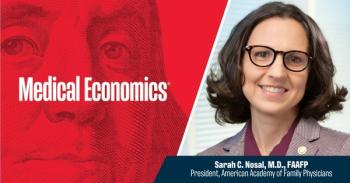
AAFP President Sarah C. Nosal, M.D., says family physicians should work from the academy's vaccine schedule and that the counseling required to explain it is time practices aren't paid for.

Physicians head into this back-to-school season with more than one immunization schedule in circulation, rising exemption rates and new counseling codes that payers are covering unevenly.

A physician's FAQ guide to Medicare's visit-complexity add-on code
Advertisement
Advertisement
Trending on Medical Economics
1
The 10 biggest federal policy threats facing physicians in 2027
2
Six physician groups push back on claims that AI is better informed than doctors
3
When a negative review becomes defamation, with Michael Pelagalli of Minc Law
4
What AI vendor contracts and AI scribe consent mean for physicians' legal risk
5